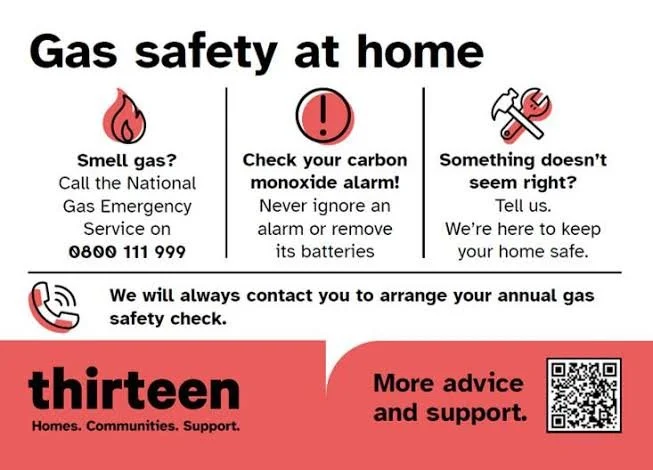
Gas Safety
Here at Partners Foundation, safety and wellbeing is our number one priority. Please ensure you are also being diligent and checking for areas that may become a risk.
Keeping your home safe from gas leaks and carbon monoxide requires annual checks, proper ventilation, and knowing what to do in an emergency
Essential Gas Safety Rules
Annual Servicing: Have all gas boilers, fires, and appliances serviced every year by a qualified Gas Safe Register engineer.
Check Engineer ID: Always ask to see the engineer's Gas Safe ID card and check the back to ensure they are qualified for the specific job.
Install a Carbon Monoxide Alarm: Fit an audible carbon monoxide alarm that complies with BS EN 50291 near your gas appliances.
Never Block Vents: Keep air vents, chimneys, and flues clear so harmful combustion fumes can escape.
No DIY Gas Work: Never attempt to install, repair, or disconnect gas appliances
Warning Signs of Faulty Appliances
Flames: A lazy, floppy yellow or orange flame instead of a crisp, steady blue flame.
Staining: Black or brown soot marks on or around the appliance.
Condensation: Unusually high window condensation in the room where the appliance sits.
Pilot Lights: Pilot lights that repeatedly go out.
Carbon Monoxide Symptoms: Headaches, dizziness, nausea, breathlessness, collapse, or loss of consciousness
What to Do in a Gas Emergency
If you smell gas or suspect a leak:
Turn off the gas: Shut off the main Emergency Control Valve (ECV) next to your gas meter (unless it is located in a basement).
Ventilate: Open all doors and windows to let fresh air in.
Extinguish flames: Put out naked flames and do not smoke.
Avoid electrical switches: Do not touch light switches or electrical appliances, as a spark could ignite the gas.
Leave the property: Get everyone outside immediately.
Call for help: Phone the free, 24-hour National Gas Emergency Helpline at 0800 111 999 from outside the building